

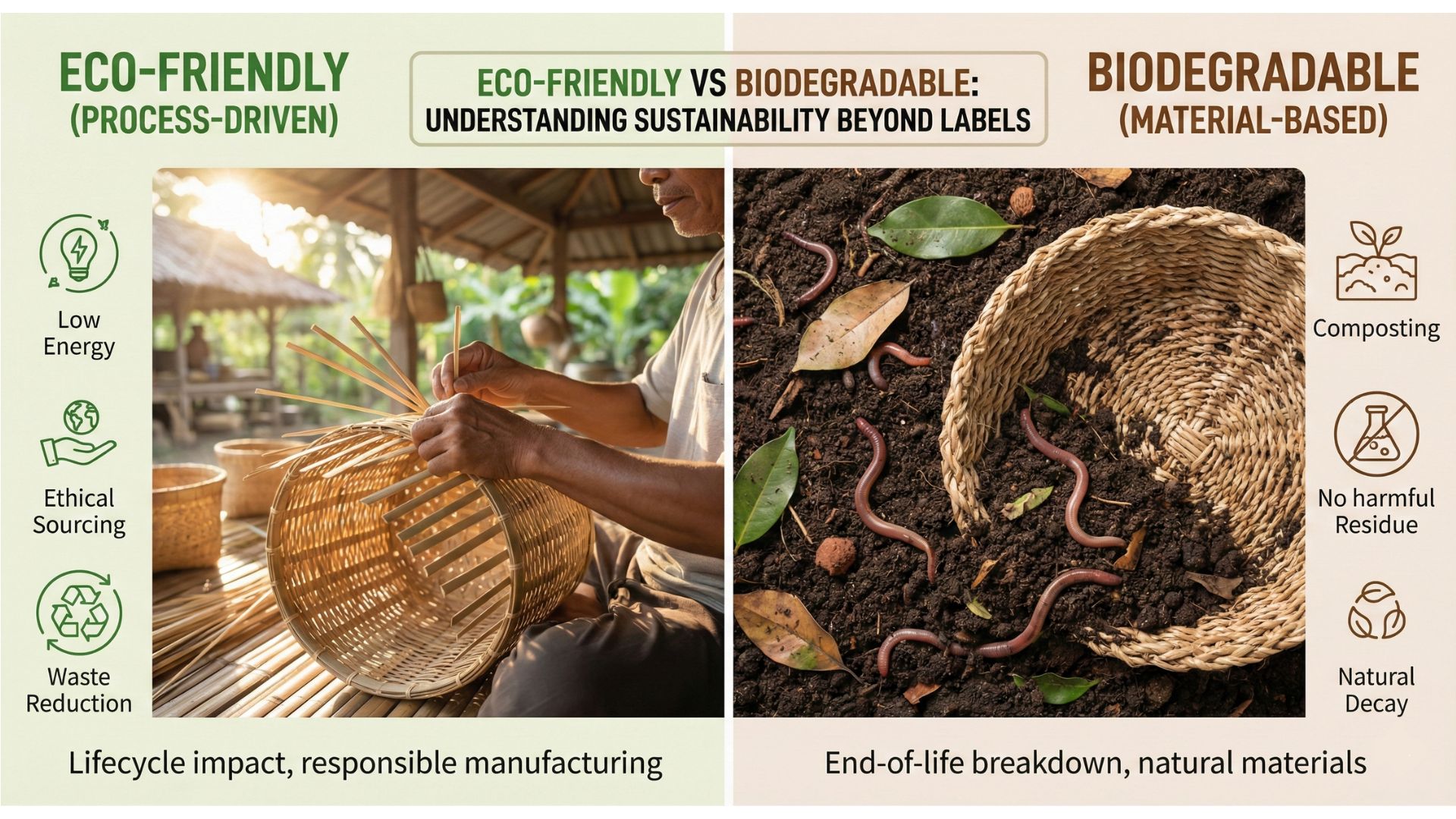
In global trade, sustainability terminology is increasingly central to sourcing decisions, regulatory compliance, and brand credibility. However, within industries such as handicraft and home décor, these terms are often misunderstood, misused, or applied interchangeably. Two of the most frequently confused concepts are eco-friendly and biodegradable. While both relate to environmental responsibility, they address very different […]
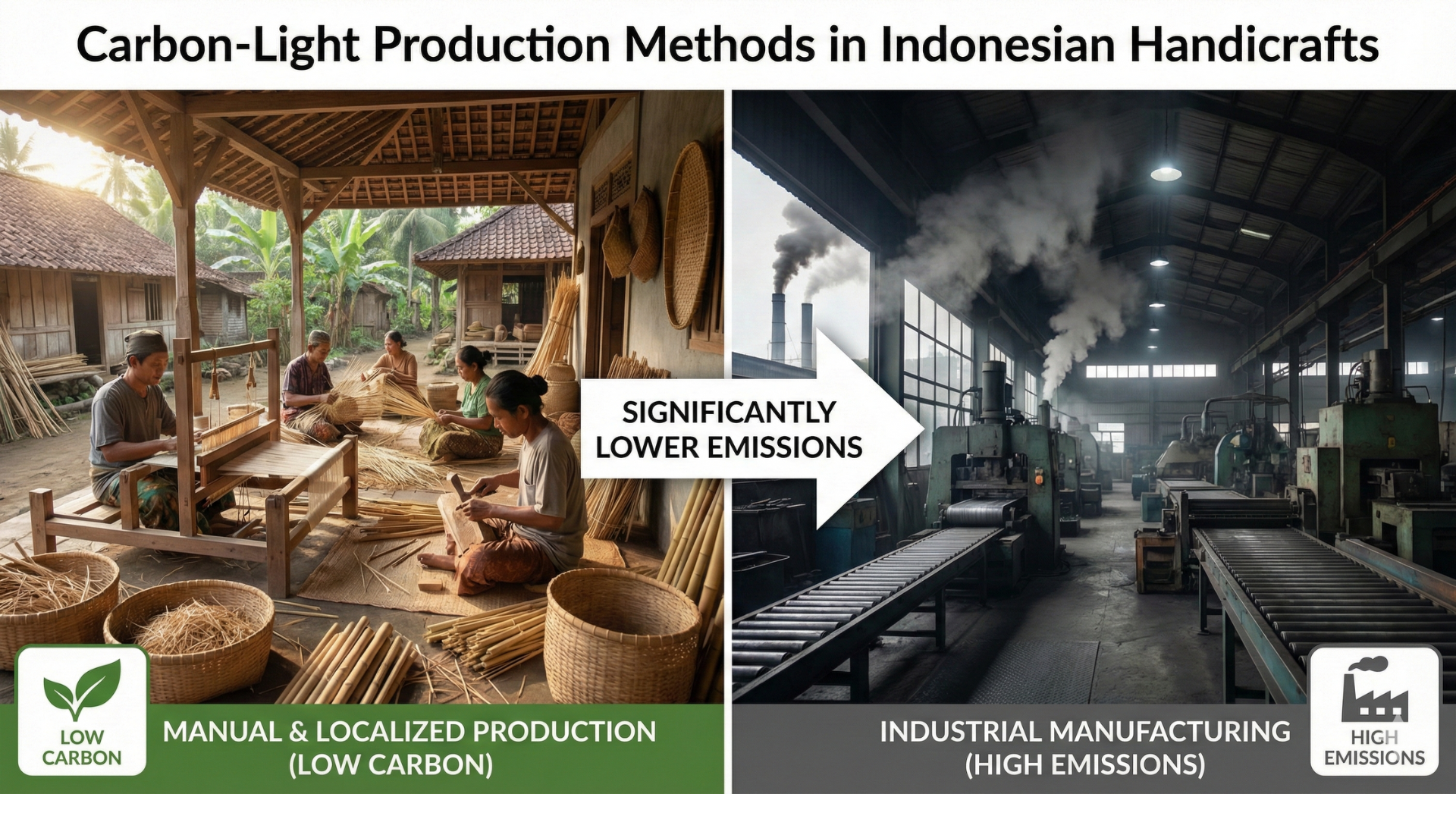
One of Indonesia’s strongest sustainability advantages lies in its carbon-light production model, particularly within the handicraft manufacturing sector. Unlike mass industrial production, Indonesian handicrafts are produced through decentralized, community-based systems that naturally limit energy consumption and greenhouse gas emissions. This production model aligns closely with the principles of green business practices and community-based circular economies, […]
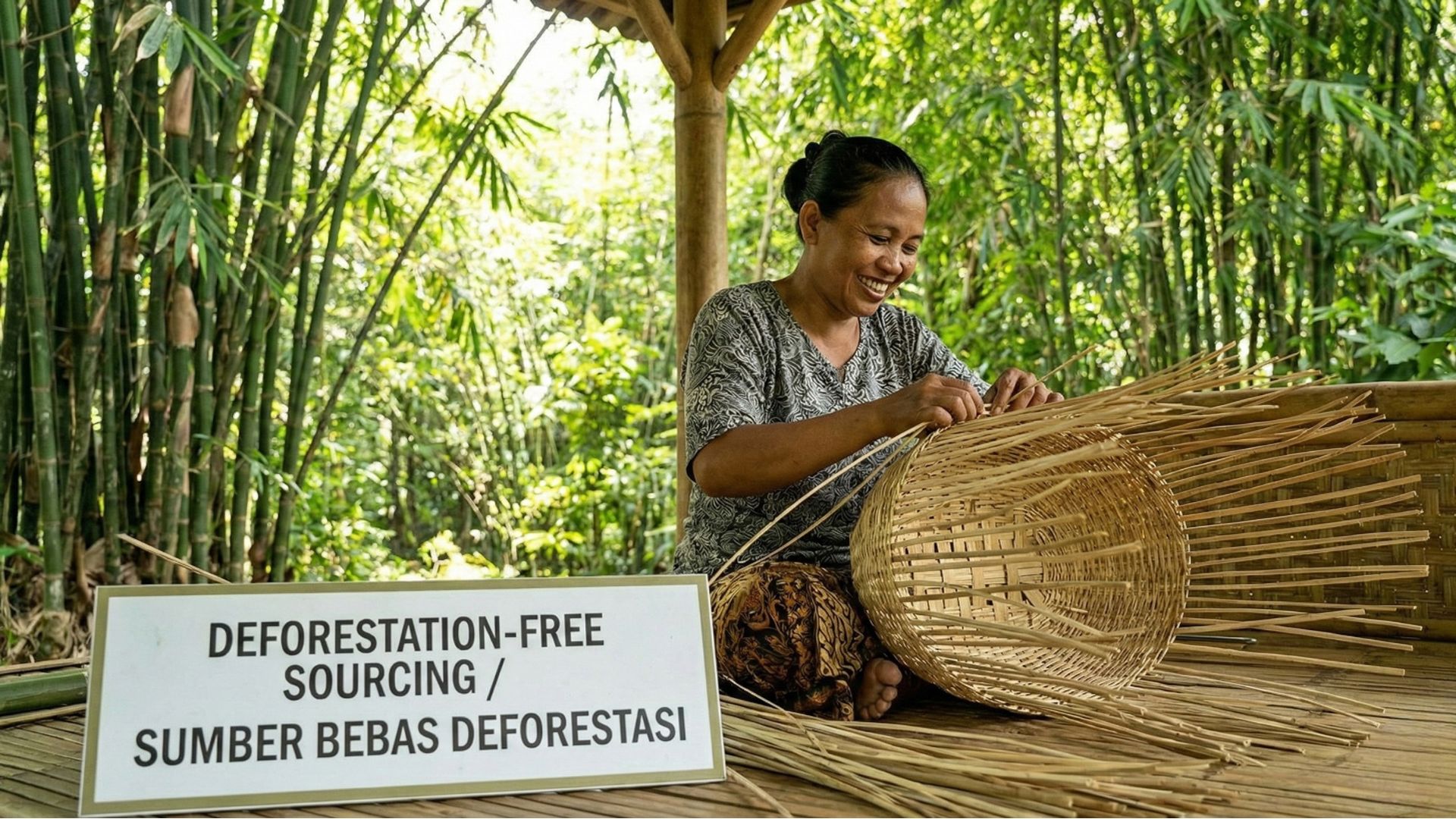
Deforestation remains one of the most critical environmental risks within global supply chains that depend on natural raw materials. In response, sustainable handicraft manufacturing in Indonesia increasingly adopts deforestation-free sourcing practices to ensure environmental responsibility, regulatory compliance, and long-term material availability. For international buyers—particularly those operating under European Union and North American sustainability regulations—deforestation-free sourcing […]

Indonesia has long been recognized as a source of authentic handcrafted products rooted in cultural heritage and artisan mastery. Today, its role has evolved far beyond tradition. Indonesia is increasingly positioned as a global hub for sustainable handicraft manufacturing, meeting the growing demand from international buyers for responsible, transparent, and export ready sourcing. As sustainability […]